Tourism and visitor information
Maps, schedules and activity details remain available after a visitor leaves the counter.
RACK CARDS
A rack card keeps useful information within reach after someone has left the counter. It can introduce a tour, venue, service or property in a format suited to brochure holders and take-away displays.
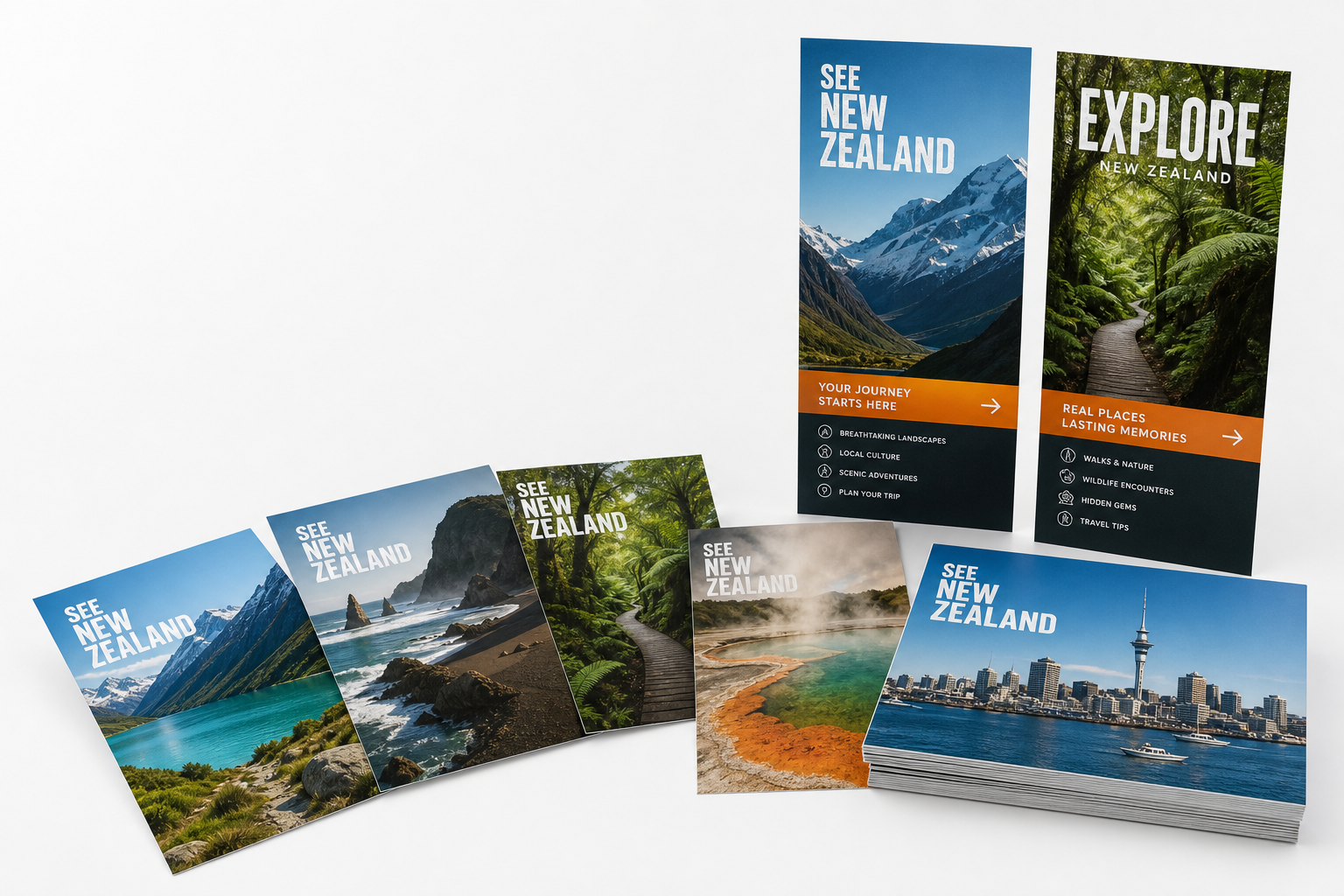
WHERE RACK CARDS WORK
The format suits messages that need more detail than a sign can carry, without becoming a full brochure.
A rack card can give a visitor the details they need after leaving the counter: a tour timetable, directions, booking information or a short service overview. It is easy to place with related leaflets in a holder, provided the card fits and the title remains visible above the front edge.
Tour details, local maps, menus, price guides and short service overviews all suit the format. The front can identify the subject and create interest, while the reverse can carry directions, booking details, operating hours or contact information without crowding the first view.
Maps, schedules and activity details remain available after a visitor leaves the counter.
A concise overview can introduce the offer before the reader moves to a call, website or appointment.
Frequently requested information has a consistent printed place in a reception or sales area.
THE DISPLAY
A card can contain strong information and still fail in the display if its important content sits below the front lip.
Most brochure holders cover the lower part of the card. The exposed panel has to carry the business name, subject and main visual clearly enough to work among neighbouring material. An existing holder provides three useful dimensions: its internal width, available depth and the height left visible above the front edge.
A second printed side gives a map, timetable or booking details their own space. If the message fits comfortably on one side, the reverse may not be needed. The card stock also needs to suit the holder and repeated handling. Fastprint confirms the available stock and printing options for the display.
The exposed area carries the subject and the detail that identifies the card from a distance.
The amount and order of information determine whether the reverse has a useful role.
The display, handling and intended life of the card provide the basis for the quoted material.
READING + RESPONSE
A rack card is usually seen among other material, then read at arm’s length after it has been picked up.
Rack cards benefit from a visible hierarchy: an identifiable subject, a short explanation and an obvious way to respond. A phone number, booking address, map location or QR code should remain easy to find without competing with several equal calls to action.
Small text and QR codes need to be checked at the finished card size. A design that looks clear when enlarged can be hard to read in a holder or in someone's hand. Fastprint checks the supplied artwork against the card being quoted; different location or language versions can keep the same format.
The main response method remains distinct from supporting addresses and background information.
Codes and addresses retain enough size and contrast to be checked from the finished artwork.
Common dimensions can support different locations, services or languages within one planned set.
GET A QUOTE
Send the finished card size, quantity and artwork. For an existing holder, include its internal opening and the height that remains visible.