Meeting and desk notes
A date line, open writing area and small action list can support everyday office use.
PERSONALISED NOTEPADS
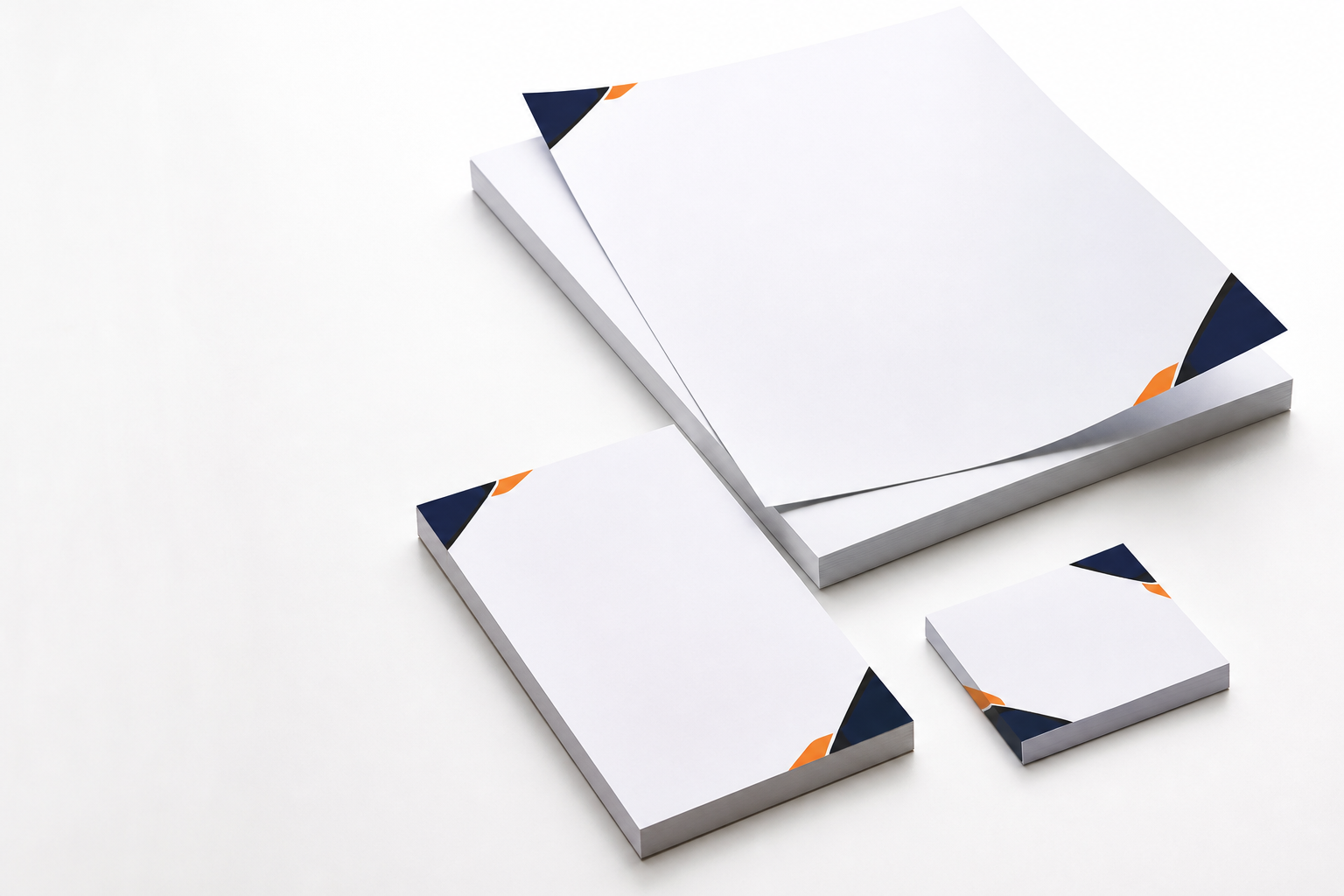
A personalised notepad puts your logo or form on every sheet. It can be a desk pad with room for meeting notes, a booking form for the counter or a checklist used on site. The design can stay simple, with a small contact block and plenty of writing space, or include the fields your team uses repeatedly.
EVERYDAY USE
A notepad becomes more useful when its layout reflects the information people record repeatedly.
A personalised pad can be as simple as a logo above a clear writing area, or as structured as a booking form used throughout the day. Meeting notes, customer enquiries, site measurements, inspection checks and telephone messages each benefit from a different balance of open space and fixed fields.
Different teams may need different versions while retaining the same brand and pad size. A sales desk might use contact and follow-up fields, while an operations team may need a site address, job reference and completion notes. The printed sheet gives each task a consistent starting point.
A date line, open writing area and small action list can support everyday office use.
Repeated contact and follow-up fields reduce the need to recreate the same headings by hand.
Measurements, checks and reference details remain organised in a familiar order.
WRITING AREA
The logo identifies the sheet, but the working area determines whether the pad remains pleasant and practical to use.
Writing space has to suit the pen work expected on the page. Ruled lines support general notes, a grid can help with sketches or measurements, and labelled fields suit repeated information. The logo and contact details remain visible without occupying the area needed for the actual task.
A removed sheet may be filed, handed to a customer or passed to another team. In those cases, the business name and useful reference information need to make sense away from the pad. Permanent phone, address and web details also matter because they repeat throughout every finished pad.
The writing pattern reflects the kind of notes or drawings expected on the sheet.
Labels, boxes and field order follow the sequence used during the task.
Business and reference information keeps a removed page identifiable after it leaves the pad.
PAD FORMAT
One figure describes the depth of each pad; the other establishes how many finished pads are available to staff or customers.
A5 and A4 describe sheet size; sheets per pad and number of pads describe different quantities. For example, 100 pads with 50 sheets each is a total of 5,000 sheets. Keeping those figures separate makes it easier to compare quotes for the number of pads you need.
Print colours, paper and finished construction can then be considered alongside the repeated sheet artwork. Fastprint confirms the available pad format, print specification and production timing when the intended use and quantities are known. The resulting quote describes one complete pad rather than an ambiguous total number of sheets.
The pad dimensions establish both the writing area and the space it occupies in use.
This count determines the depth and working life of each individual pad.
The finished quantity reflects the number of users, desks, branches or customer packs.
One completed sheet layout repeats throughout the agreed pad construction.
GET A QUOTE
Send the pad size, sheets per pad, number of finished pads, print colours and repeating sheet artwork. Include the delivery destination and required date.