Flat brochure
A compact option for short explanations, menus, programmes, maps, offers and product summaries.
BROCHURES
A brochure gives someone time to browse your products or services after a meeting, event or visit. It can explain a small range on a flat sheet, divide information across folded panels or give a larger range several pages. Fastprint can help compare the formats using the amount of content and where the brochure will be handed out or displayed.
FORMAT + READING
The best brochure format gives each part of the message enough room without making the reader work to find it.
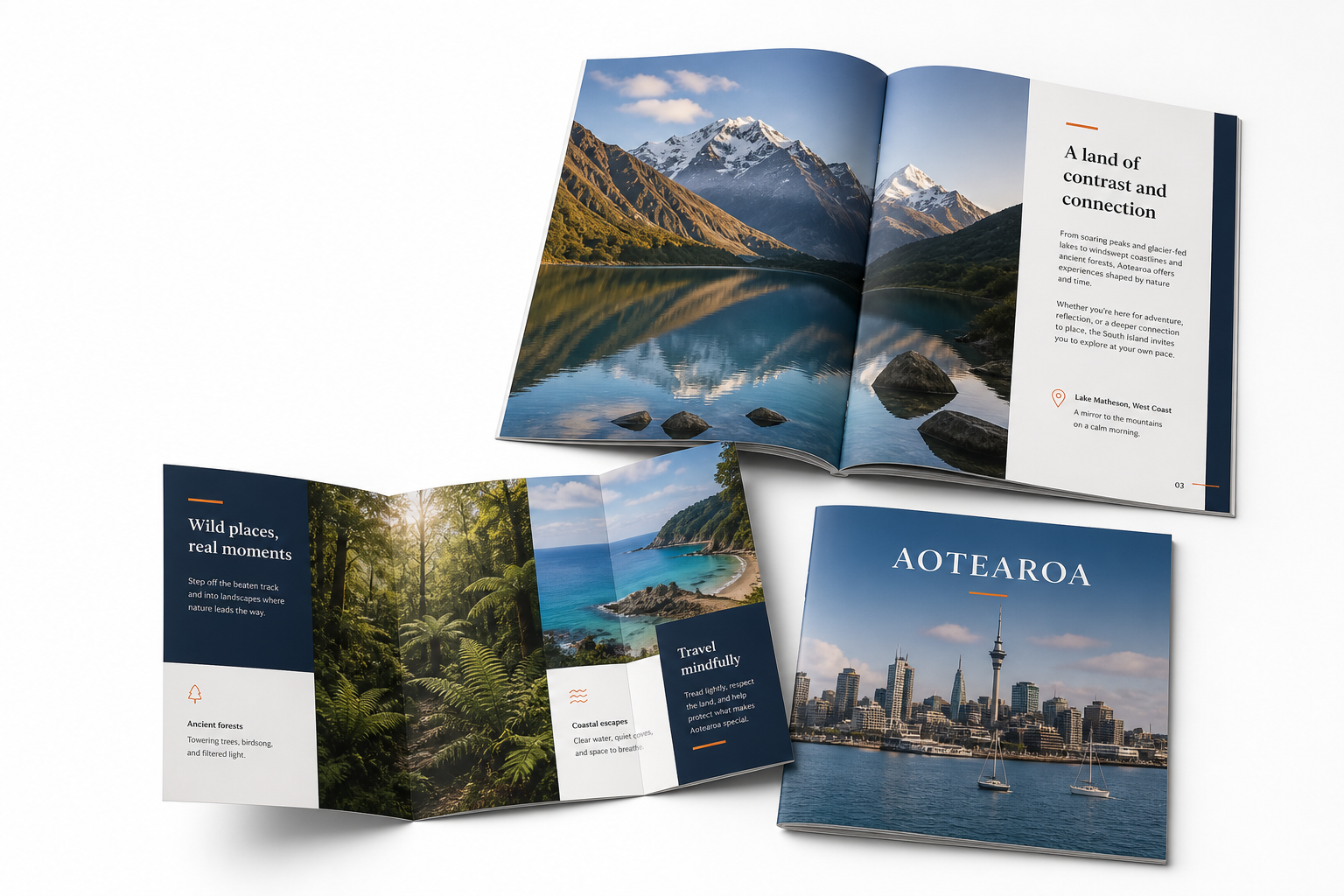
A flat brochure suits a concise overview, menu, programme or product sheet that can be understood across one or two sides. A folded brochure introduces a natural sequence of panels, making it useful when the message moves from an opening idea to supporting detail and then to contact information. A multi-page brochure gives substantial content or several product groups more breathing room.
Where the brochure will live also affects the choice. A piece for an envelope, display, folder or counter has physical limits; an event handout or sales-room brochure may have more freedom. The format works best when finished size, reading order and distribution method reinforce one another instead of forcing the content into an arbitrary template.
The important information needs enough room at the finished size. Product photographs, prices or service descriptions can become difficult to read if too much is squeezed into each panel. A fold or extra page may help, but editing out repeated information can also make the brochure easier to browse.
A compact option for short explanations, menus, programmes, maps, offers and product summaries.
Separate panels organise a message without turning it into a bound publication.
Additional pages suit longer stories, broader ranges, case studies or material that needs clear chapters.
WHAT QUALITY LOOKS LIKE
Finished size, paper, folds, page order and artwork should all describe the same object.
The clearest brochures have an obvious starting point, readable type at actual size and enough contrast between headings, images and detail. Folded work should open in the intended order without important content disappearing into a fold. Multi-page work should feel continuous rather than like unrelated sheets gathered together.
Paper and finish affect weight, colour appearance and handling, but the most expensive treatment is not automatically the most suitable. A brochure intended for a busy counter, a one-day event, a mailed pack and a considered sales meeting may justify different choices even when the artwork carries the same brand.
Fastprint checks the artwork against the quoted size, folds or page count. The proof is approved before production, so the order of the content and the printed details can be checked before the run begins. Paper, finishing and delivery timing are confirmed with the quote.
The subject, main sections and next step can be found without reading every line first.
Panels or pages reveal information in the intended order and do not interrupt key text or imagery.
The finished brochure fits the envelope, display, folder, counter or handout situation in which it will be used.
Size, weight and finish suit the amount of handling expected after the brochure is handed over.
GET A QUOTE
Tell us what the brochure needs to communicate and where it will be used. If the format is known, include the finished size, folds or page count, printed sides, stock or finish, quantity and artwork. Add the delivery destination and required date.